

Sul Ross examines course offerings
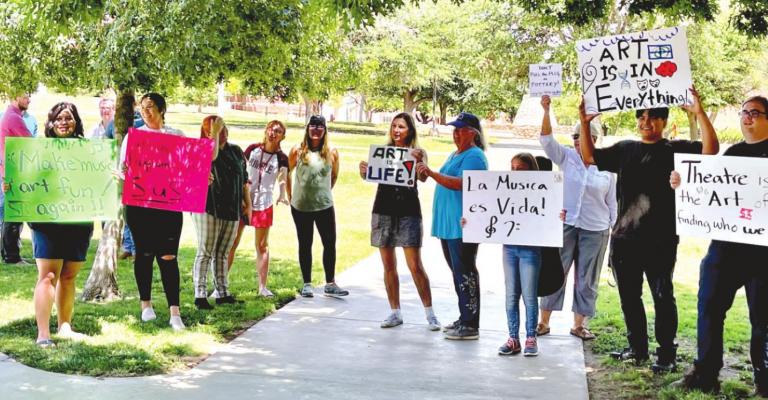
In February Sul Ross State University then-Provost Dr. Robert Kinucan recommended to President Pete Gallego that he form the Academic Planning Committee based on fiscal challenges created by COVID-19, static enrollment, a budget shortfall, and declining state support.
This was the first convening of an APC in the university’s 100-year history, and included faculty from the Alpine, Del Rio, Eagle Pass, and Uvalde campuses.
The intent was to examine low-enrollment programs and other inefficiencies, and recommend closures or streamlining of some programs. In addition, other costsaving measures were considered to improve the future quality of academic and administrative instruction.
The APC met in May at two multi-day retreats, and recommended certain programs be cut, decreased, combined, or frozen, with a corresponding release of faculty.
Various changes were recommended in chemistry, Spanish, fine arts, psychology, English, agricultural education, biology, and nursing. And some of the proposed changes had students up in arms.
Gallego last week spoke with the Avalanche, and said all recommendations should be taken in context, and no decisions had yet been made.
“We are trying to figure out what our alignment should be,” he said. “Sul Ross has never undertaken a full-scale internal study of how our current course offerings align with the courses students want to take.”
He noted since most of the university’s budget consisted of fixed costs such as salaries, utilities, bond payments, and so on, to nurture programs that are growing or to add new programs, money must move from one program to another.
Said Gallego, “Our state appropriation is based on how many semester credit hours we teach. Therefore, it’s important that we know what academic subjects are most in demand.”
He stressed the Planning Committee report was about realigning the university’s offerings to achieve longterm growth. It wasn’t intended to give warning of what programs would be closed, but rather was an internal study of where the university stood today.
Gallego said Sul Ross was born as a teacher’s college, and the education program was still very strong. The kinesiology program was growing, and agriculture and natural resource sciences remained strong. Although the nursing program just started, he said its prospects were very good.
Some up and coming areas where the university might want to invest more include computer programming, cyber security, and gaming technology.
“This isn’t any different than the basic principles of supply and demand,” said Gallego. “You have to supply what students are demanding. We’re not broke by any means, we’re not on the edge. But we need to invest our money differently.”
After successive years of fewer credit hours, enrollment for 2021 is above 2020, and closing in on 2019.
Said Gallego, “If that trend continues, we’re going to start an upward trajectory. A key element of attracting students is offering courses that students want to take.”
To view the complete Planning Committee report, visit sulross.edu, and click on APC Report 2021 in the right hand column.
