

Sifting through cobbler recipes, one skillet at a time

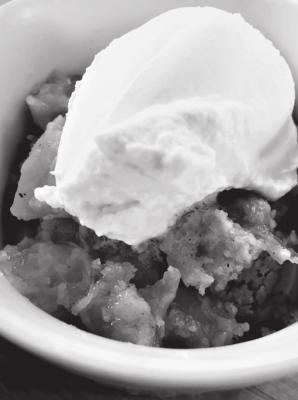
I recently thawed out the final package of Fort Davis peaches from last year. I started out with five pounds of cleaned, cut, and vacuum-sealed fruit that stayed tasty and frozen throughout fall, winter and into spring. And now, they’re all gone.
I’ve gotten into the habit of making cobblers when the hankering for something not-too-sweet but still deliciously comforting strikes, and have been experimenting with different recipes for a while.
I made berry cobblers when I had fresh blueberries and strawberries, and pear cobbler when I had an abundance of Fort Davis pears. Peach is still my personal favorite. They’ve all been baked in a cast iron skillet, but vary in amounts of flour, sugar, milk, butter, etc.
While my standard cast iron cobbler recipe was just fine the way it was, I felt compelled to try to make it better.
Some recipes call for a thin dough to be poured into melted butter and topped with fruit. Others call for the dough to be poured on top of the fruit. Some call for biscuit-like dough to be placed carefully among the fruit before baking.
Once upon a time, I won a friendly competition where first prize was bragging rights for the best peach cobbler. At the time, I had a favorite recipe that made me look like I really knew what I was doing back when I didn’t, and I won.
The Limestone Grille in Boerne always had my favorite peach cobbler, and the day they shared their recipe was the day my baking skills began to increase.
Considering the recipe called for a whole pound of butter, it’s no wonder everyone liked my contest entry best, and the fact that the recipe called for canned peaches wasn’t even an issue.
The most recent cobbler experiment was by far the simplest, and produced an amazing skilletful of peachy goodness. This one is up at the top of my favorites list now.
You don’t need a cast iron skillet for this recipe because it can be made in a baking dish or pan. Just be sure you cook the fruit before putting it in your dish. Read on, and you’ll know what I mean.
I keep a pint of heavy whipping cream in the fridge for these situations. For my quick whipped cream, I pour it in the blender, add a healthy splash of maple syrup, a splash of vanilla, and let it rip until the cream is the whipped consistency I want. If you let the cream blend too long, it will turn to butter, which isn’t a terrible thing in itself, but keep an eye on it because it happens in a blink.
Send requests, comments, and suggestions to johnskrysta@gmail.com.
