

Hot sun scalding tomotoes

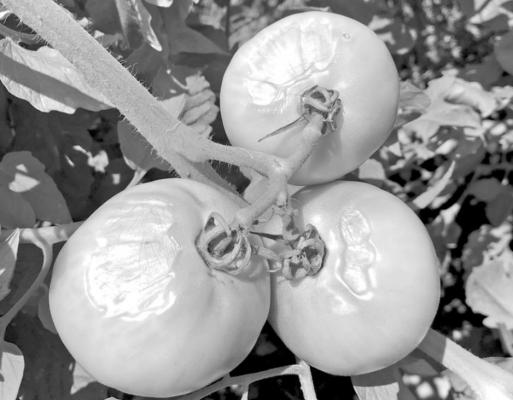
Dear Neil: What caused this to happen to my tomatoes?
This is sunscald damage. It happens when fruit is exposed to intense, direct rays of sunlight, especially after a period of cloudy, cool weather. It can also help happen when the plant loses foliage due to disease. There was a good bit of this after the May and June cloudy spells. Once it turned sunny, the vulnerable fruit was exposed. Hopefully you have fall tomatoes planted and growing. This won’t be a factor in fall’s cooler weather.
Dear Neil: My mother has a hibiscus with little black specks all over its buds. What are they, and what can be done to prevent them?
Those certainly sound like aphids. They love hibiscus, and they will congregate on the buds and new leaves. Start by trying to wash them off with a hard stream of water. If that doesn’t work, find an insecticide that is labeled to control aphids and that does not have a disclaimer against use on hibiscus. Hibiscus foliage can be damaged by several types of insecticides.
Dear Neil: A couple of years ago I noted the death of part of my vinca (periwinkle) crop. You suggested the use of the variety Cora. That did help for one season, but then the problem returned. What advice can you offer?
The disease you’re referring to is Phytophthora, a water mold fungus that attacks the various periwinkles. The Cora series was introduced as being resistant to the disease, but after a few years it began to affect Coras as well, just as you noted. In recent years growers have introduced Cora XDR vincas, with the XDR standing for “extra disease resistance.” So far they seem to be holding up very well. As always, however, plant periwinkles late, no earlier than mid- or late-May and through June, even into July. Use fresh potting soil if planting into containers, and be sure beds drain perfectly.
Dear Neil: I have a 14-year-old oak tree that suddenly split, and has been leaking a brown fluid. The leaking has since stopped. The tree still appears to be healthy with a good canopy. Any suggestions?
This is radial shake brought on by the extreme cold of February. The fact that the canopy looks good tells us that the tree is probably healing itself. It would not be a bad idea to have a certified arborist check things out. It appears that the tree’s root flare is too low. The arborist may suggest use of an air spade to get rid of some of the soil that has accumulated around it.
Have a question you’d like Neil to consider? Email him at mailbag@ sperrygardens.com. Neil regrets that he cannot reply to questions individually.
